
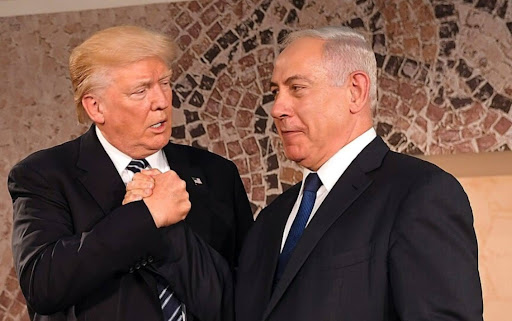
Israeli Prime Minister Benjamin Netanyahu has been practicing what might be called strategic patience on Iran for four decades — consistently warning about the threat, consistently advocating for stronger action, and consistently positioning himself for the moment when circumstances would allow the kind of comprehensive response he has always believed necessary. That moment has arrived — but the partner Netanyahu is working with, Donald Trump, has a more modest vision of what the conflict should achieve. The collision between four decades of Netanyahu’s preparation and Trump’s bounded objectives is defining the alliance’s central tension.
Strategic patience implies a long timeline and a clear endpoint. Netanyahu’s endpoint — a transformed Middle East with a diminished or replaced Iranian regime — is the destination he has been working toward. The current conflict, however it was triggered, provides the opportunity to pursue that endpoint aggressively. The South Pars strike, viewed through this lens, is not an impulsive act — it is an expression of the comprehensive degradation strategy that Netanyahu’s long-term thinking has always indicated is necessary.
The divergence with Trump is, from this perspective, not a failure of coordination but a clash between a leader executing a long-prepared strategy and a leader managing a more immediate and bounded conflict. Trump’s nuclear containment objective is achievable on a shorter timeline through more targeted means. Netanyahu’s transformation objective requires the comprehensive approach that South Pars expressed. Both are internally coherent; they simply reflect different strategic timeframes and ambitions.
Director of National Intelligence Gabbard confirmed the divergence officially. Whether Netanyahu’s strategic patience will ultimately produce his desired outcome — or whether the constraints of alliance management with Trump, international pressure, and Iranian resilience will limit what is achievable — is the test that the current conflict is administering to a four-decades-long strategic framework.
The challenge for the alliance is managing the tension between Netanyahu’s long, comprehensive strategy and Trump’s shorter, bounded one. Finding the synthesis — if one exists — between nuclear containment as an achievable near-term goal and political transformation as a longer-term aspiration may be the strategic innovation the Trump-Netanyahu alliance currently needs most.