
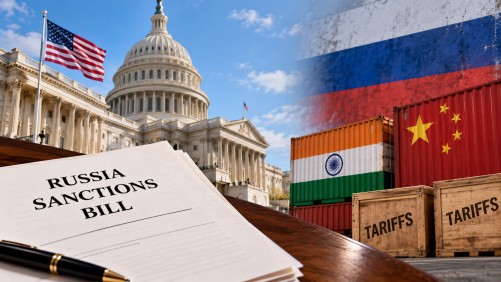
The geopolitical landscape is set to experience shifts as the United States moves closer to intensifying economic pressure on Russia and Iran. The US House of Representatives has passed a significant sanctions package, known as the Lindsey O. Graham Sanctioning Russia and Iran Act of 2026, which awaits consideration by President Donald Trump. This act empowers the President to impose tariffs of up to 100% on countries that continue purchasing Russian oil and natural gas, a move that could impact major economies such as India and China.
Having already cleared the Senate, the legislation targets key sectors of Russia’s economy, particularly its energy and defense industries. It addresses Russia’s network of oil tankers, which have been implicated in circumventing existing sanctions. The bill’s provisions allow for substantial tariffs on goods from countries that either purchase Russian energy or assist in sanctions evasion, though these tariffs are not automatic and require presidential action.
India, a significant importer of Russian energy, could find its trade dynamics affected by this legislation. The country’s Ministry of External Affairs has emphasized that its energy sourcing decisions are driven by national interests, suggesting potential friction in US-India trade relations as the two nations continue discussions.
In addition to focusing on Russia, the bill extends and introduces new sanctions against Iran. The act aims to further isolate Russian officials, financial institutions, and entities involved in skirting sanctions, amplifying the economic pressure on Moscow.
The passage of this bill reflects the United States’ strategic approach to leveraging economic tools in its foreign policy, aiming to curtail Russia’s influence and activities on the global stage. As President Trump considers the legislation, the international community watches closely, particularly those nations that may be directly affected by the potential tariff measures.