
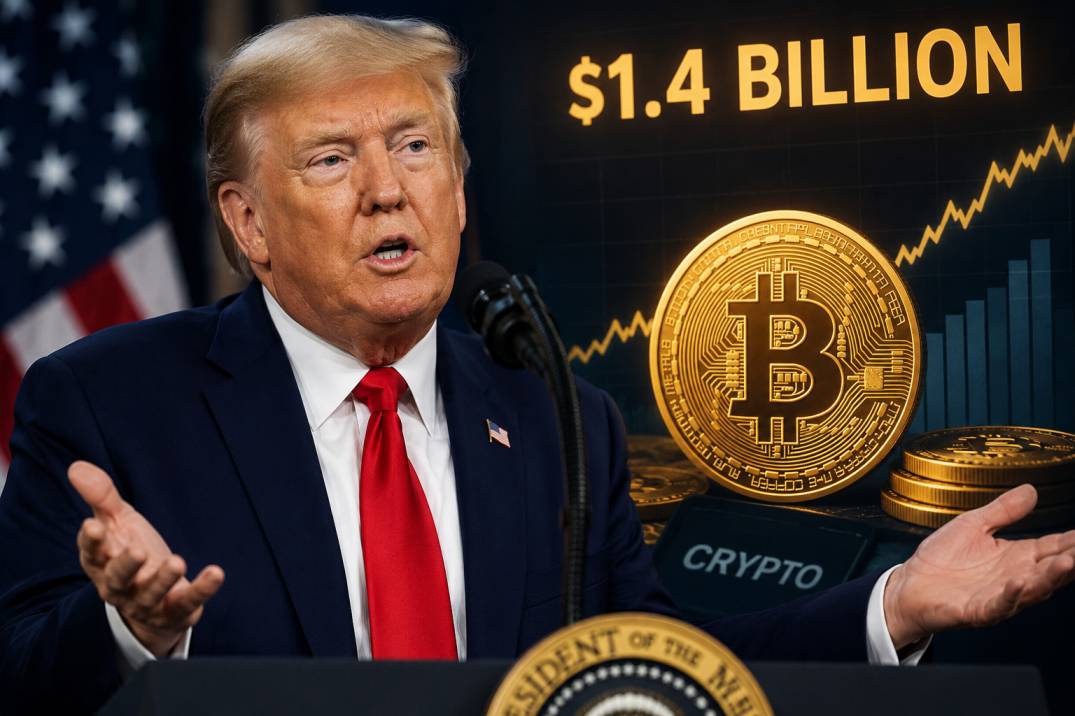
Since his return to the White House, President Donald Trump has come under scrutiny for the substantial wealth he has amassed from cryptocurrency ventures. However, Trump has defended his financial achievements, asserting that they reflect the broader economic prosperity that many Americans are experiencing. On July 1, while speaking to reporters, Trump emphasized that the success of his investments mirrors the opportunities created by rising markets for investors nationwide, not just for himself. He drew attention to both his business acumen and his political career, dismissing concerns about his personal earnings as unfounded.
A financial disclosure filed on June 30 revealed that Trump earned over $1.4 billion from cryptocurrency activities in 2025. The details of the filing showed that nearly $800 million of this amount was derived from World Liberty Financial, a cryptocurrency company co-founded by his sons, while another $635 million came from the sale of the $TRUMP meme coin. This disclosure highlights the significant role digital assets now play in Trump’s business portfolio, marking a shift from his traditional investments in golf courses, hotels, and real estate, which also continued to generate substantial income.
Despite these profits, Trump maintains that he is not directly involved in managing his investments. He stated that others are responsible for overseeing his financial affairs, and he does not engage in the day-to-day decision-making processes regarding his assets. When questioned about the impressive figures, Trump pointed to the overall performance of financial markets, noting that rising stock prices have broadly benefited investors across the country, suggesting his gains are part of a larger economic trend.
The financial disclosure has reignited discussions about the potential connections between the administration’s cryptocurrency policies and Trump’s personal financial interests. Since assuming office again, his administration has initiated several policy measures perceived as favorable to the digital asset industry. These include the establishment of federal regulations for asset-backed digital currencies and a reduction in regulatory enforcement by the Department of Justice and the Securities and Exchange Commission. These policy changes have coincided with notable growth in the cryptocurrency market.
As digital assets grow increasingly influential in both financial markets and public policy, Trump’s substantial crypto holdings are expected to continue attracting public and political attention. While his remarks frame these gains within the context of a broader economic trend, the interplay between his administration’s policies and his personal financial interests remains a focal point of interest and scrutiny.