
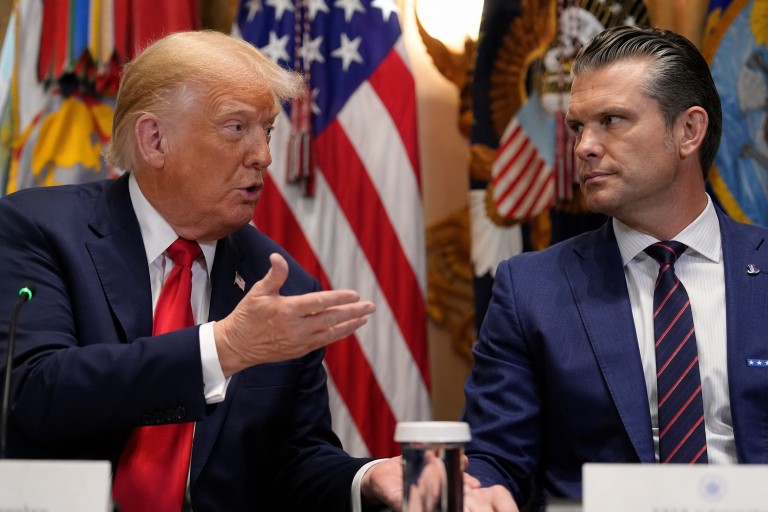
Amid escalating tensions with Iran, President Donald Trump has reiterated his confidence in Defense Secretary Pete Hegseth, commending him for his effective leadership. This endorsement comes despite ongoing scrutiny regarding the military strategies being advised in the face of the conflict. Trump highlighted Hegseth’s role in cautioning that Iran was on the verge of a “point of no return,” suggesting pre-emptive measures to avert a potential threat to the United States.
According to Trump, Hegseth alongside other key advisers, presented intelligence indicating Iran’s increasing proximity to a critical threshold, advocating for decisive action to ensure national security. The recommendations included pre-emptive military options aimed at forestalling any aggressive moves from Tehran. These discussions have sparked debate over the appropriate balance between military intervention and diplomatic resolutions.
In a related development, Trump claimed that Iran had initiated requests for dialogue, both through intermediaries and direct communication channels, following recent U.S. military maneuvers. He argued that these actions have pressured Tehran into pursuing diplomatic talks, suggesting that the administration’s strategy of combining military assertiveness with opportunities for negotiation may be yielding results.
The backdrop to these events is the Trump administration’s ongoing strategy to manage regional tensions through a dual approach of exerting military pressure while remaining open to diplomatic engagement. This complex balancing act is central to the administration’s foreign policy in the Middle East, as it seeks to navigate the volatile relationship with Iran without escalating into open conflict.