
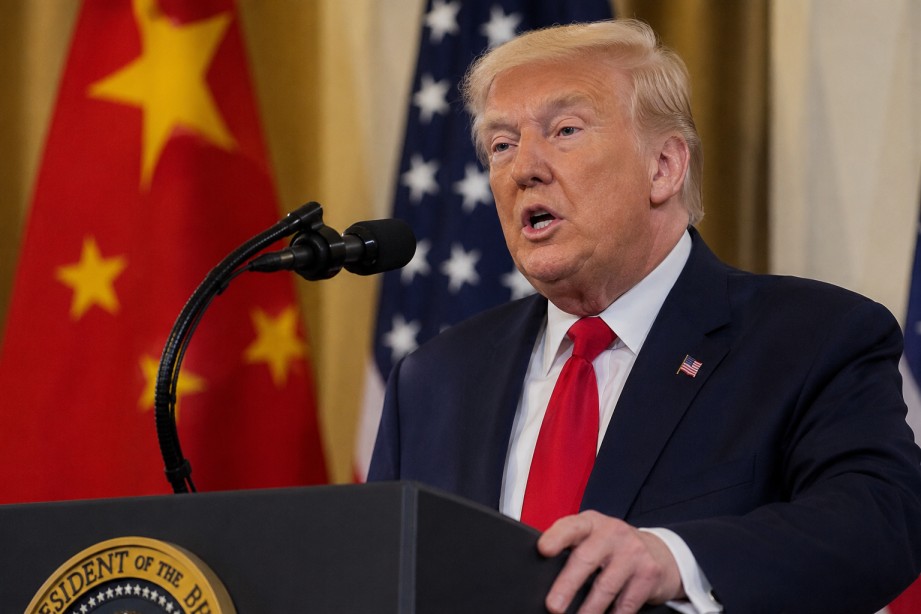
In a recent address, former US President Donald Trump has reiterated his claims of Chinese interference in the 2020 presidential election, revealing plans to declassify intelligence documents and instructing federal agencies to scrutinize what he described as hidden vulnerabilities in election security. Trump emphasized his concerns regarding the lack of public trust in the US electoral system and called upon key federal entities, including the Department of Justice, FBI, CIA, and the Office of the Director of National Intelligence, to examine how intelligence related to the election was managed. Additionally, he advocated for Congress to enact stricter voter identification laws.
These assertions have been met with strong opposition from Democratic leaders, who argue that extensive investigations, audits, and recounts have consistently shown no evidence of foreign interference affecting the election’s outcome. Intelligence agencies and courts have also supported these findings, leading critics to suggest that Trump’s accusations could be an attempt to undermine public confidence in the electoral process ahead of the forthcoming congressional midterm elections.
Meanwhile, China has firmly denied the allegations, maintaining its established stance of non-interference in the internal affairs of other nations. The Chinese government has consistently rejected claims of involvement in the US elections, emphasizing its commitment to respecting the sovereignty of other countries.
Supporting the stance of non-interference, a US intelligence assessment released in 2021 concluded that no foreign power, including China, manipulated the technical aspects of the 2020 US voting process. This assessment aligns with the conclusions drawn from various investigations and audits conducted to verify the integrity of the election.