
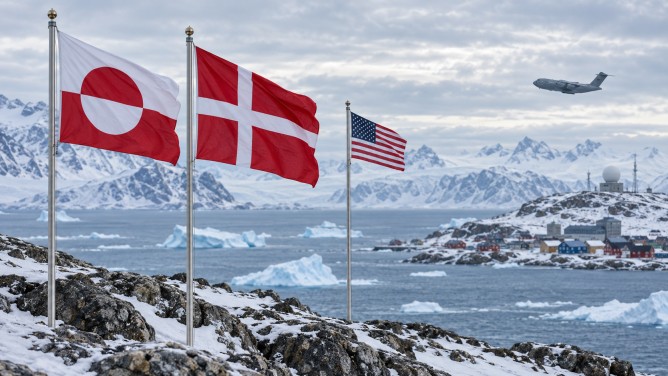
The strategic significance of Greenland in the Arctic has prompted a recent proposal to expand the United States’ military presence on the island, raising questions about sovereignty and security. This development comes amid heightened interest in the Arctic’s mineral resources and emerging shipping routes, which have increased tensions between the U.S., Denmark, and Greenland.
Both Denmark and Greenland have assured that the proposed agreement will uphold Greenland’s sovereignty and the right of its people to self-determination. This clarification follows President Donald Trump’s announcement of an agreement that grants the U.S. what he described as “permanent control” over Greenland’s security. Greenland’s Prime Minister, Jens-Frederik Nielsen, emphasized that the deal respects Greenland’s territorial integrity and the Greenlandic people’s self-governance.
Danish Foreign Minister Lars Lokke Rasmussen stated that the agreement aligns with Denmark’s conditions, potentially enhancing security in the Arctic and North Atlantic regions. The proposed deal would allow the U.S. to develop a significant military presence in Greenland, while preventing adversarial nations from establishing military bases on the island.
Details about the scale of the U.S. military expansion and any potential influence over Greenland’s foreign policy or natural resources remain undisclosed. The agreement is expected to be signed during the upcoming United Nations General Assembly, signaling a pivotal moment for Arctic security and international relations.
The U.S. currently operates out of the Pituffik Space Base in Greenland, which plays a crucial role in missile warning and space operations. NATO has expressed support for the agreement, viewing it as a step toward increased security and cooperation in the Arctic region, underscoring Greenland’s strategic importance to the United States.