
Amid growing global challenges to the rules-based international order, the European Union is exploring new avenues for strategic partnerships. A significant step in this direction is the EU’s proposal to welcome Canada as its first “associate member.” This initiative, led by European Commission President Ursula von der Leyen, aims to strengthen ties in technology, defense, and energy, highlighting the shifting dynamics in international relations.
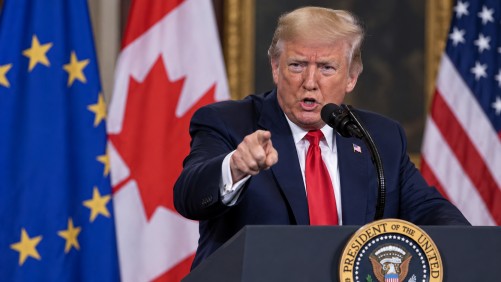
The proposal has not gone unnoticed in Washington. U.S. President Donald Trump has sharply criticized the potential EU-Canada alliance, labeling it a “laughable” idea. Trump warned that the United States might respond with substantial tariffs on European goods or by reducing trade with the EU. His administration perceives the move as potentially hostile, although Trump indicated that the U.S. response would depend on the intent behind the EU’s actions.
Canada, already linked to the EU through a trade agreement and various bilateral arrangements, sees this potential associate membership as an opportunity to further diversify its international partnerships. This comes at a time when Canada is seeking to expand its defense collaborations beyond its traditional ally, the United States. Ottawa has also applied to join the British-led Joint Expeditionary Force, which includes ten NATO member states, signifying its broader strategic ambitions.
The details of what associate membership would entail remain under discussion, as the EU currently lacks a formal category for such a relationship. However, examples of close economic ties with non-EU countries can be seen in the cases of Norway, Iceland, and Switzerland. Von der Leyen emphasizes that the EU aims to extend its relationship with Canada beyond trade, envisioning a comprehensive “alliance for the future” that encompasses defense industries, artificial intelligence, critical minerals, and Arctic cooperation.
This development reflects a broader trend of democracies seeking closer cooperation to counter challenges to the international system. As the EU and Canada deliberate on this potential partnership, the implications for global trade and diplomatic relations continue to unfold, with the United States closely monitoring the situation.