
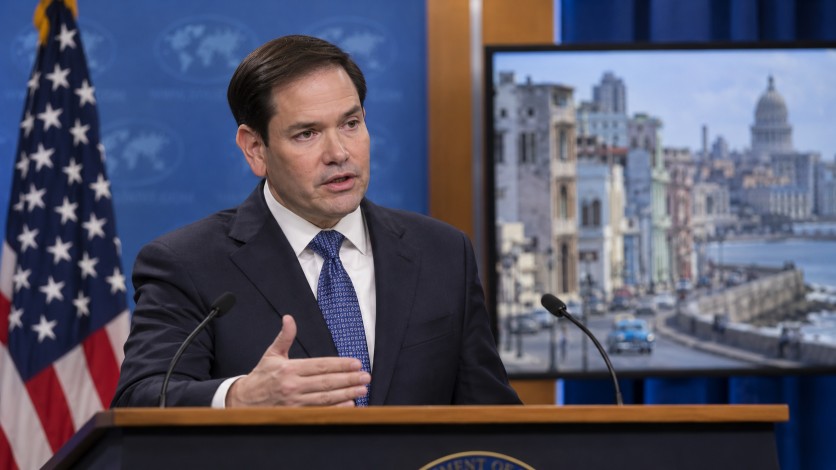
In the wake of President Donald Trump’s recent remarks about U.S. warships potentially passing near Cuba, U.S. Secretary of State Marco Rubio has called on Cubans seeking political change to seize the moment. Rubio made his appeal through social media, emphasizing the public’s growing discontent over issues such as corruption, economic hardships, and societal inequality. While Rubio’s comments appeared to support a push for political change in Cuba, he did not provide specifics about any planned actions.
Trump’s statements, made during a rally in Florida, hinted at the possibility of U.S. naval vessels nearing Cuba as they return from the conflict with Iran. The president suggested that Rubio could play a role in facilitating an agreement, which has fueled further speculation about the United States’ intentions towards the Cuban government.
The Cuban government has criticized these statements, with Deputy Foreign Minister Carlos Fernández de Cossío dismissing any notion of cooperation with U.S. intelligence and accusing the U.S. of meddling in Cuban internal affairs. This reaction highlights the ongoing tension between the two nations, despite recent dialogues aimed at improving relations.
Rubio has consistently criticized Cuba’s socialist regime, labeling its economic system as flawed and raising concerns about its alliances with governments hostile to the United States. The Trump administration has sustained economic sanctions against Cuba but has also expressed a willingness to negotiate differences.
The relationship between Cuba and the United States remains fraught, with Washington voicing concerns over Cuba’s security alliances and Havana denouncing the long-standing U.S. economic embargo. Meanwhile, Cuba is grappling with a severe economic and energy crisis, characterized by power outages, food shortages, rising inflation, and declining economic activity, which have spurred public protests and emigration.