
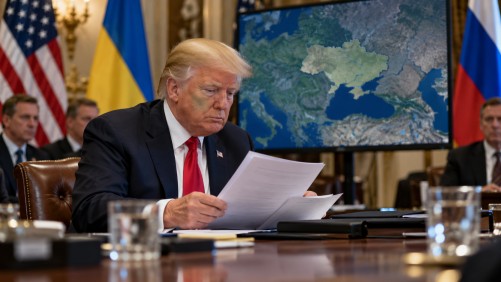
Amid rising tensions with Ukraine, President Donald Trump has decided to delay a new set of sanctions against Russia, which were slated to take effect on October 18. This move comes as the United States faces criticism for a recent agreement to purchase diesel from Russia, further complicating its foreign policy stance.
Trump had signed the sanctions legislation last month following bipartisan approval in Congress. The measures, initially championed by the late Senator Lindsey Graham, aim to target Russian officials, banks, and oil tankers involved in transporting Russian energy supplies. Additionally, the legislation permits tariffs of up to 100% on the top five importers of Russian oil or natural gas, with certain exemptions, to curb Moscow’s energy revenue and exert economic pressure over its ongoing conflict with Ukraine.
The president’s decision to hold off on enforcing these sanctions has sparked disapproval from several lawmakers, including a bipartisan group of U.S. senators urging him to implement the restrictions. The situation has been further intensified by Trump’s announcement of a diesel supply deal with Russia, which involves shipments exceeding 300,000 metric tons, with more deliveries anticipated in the future.
Ukrainian President Volodymyr Zelenskyy has criticized the diesel agreement, expressing concerns that the revenue from these sales could bolster Russia’s military efforts. This has led to questions about the consistency of U.S. policy towards Moscow, especially as Washington has previously urged Russia to cease its military actions in Ukraine.
The controversy emerges as President Trump has voiced criticism against Ukraine’s leadership, blaming Ukrainian attacks on Russian oil refineries for contributing to rising energy costs. With the midterm elections approaching, issues of energy pricing and foreign policy have become pivotal political topics.
In South Carolina, the decision to postpone the sanctions has also drawn attention, where Darline Graham, the sister of Senator Lindsey Graham, is campaigning for a full Senate term. Graham supports the legislation but acknowledges the president’s discretion in its implementation.
The situation leaves uncertainty about whether the United States will eventually enforce the sanctions or if it will continue to prioritize measures aimed at reducing energy costs and addressing the conflict in Ukraine.