
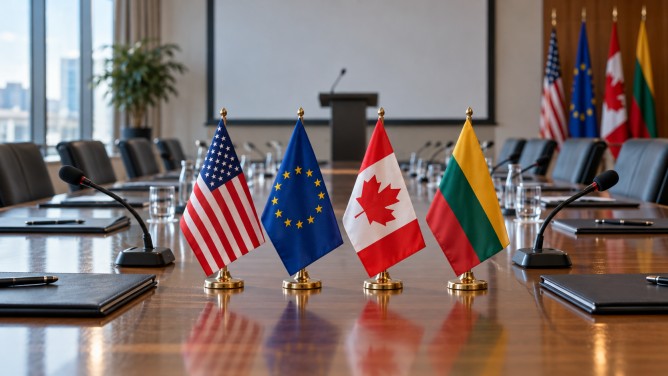
In a move influenced by U.S. concerns, Lithuania, Canada, and the European Union have withdrawn their official support from the #Disinfo2026 conference, a European event focused on addressing disinformation. Scheduled for October 7 and 8 in Vilnius, Lithuania, the conference aims to bring together experts from various fields to discuss information manipulation and strategies to counter it.
Just days before the conference, the logos of Lithuania’s Foreign Ministry, Canada’s Global Affairs department, and the European External Action Service were removed from the list of official supporters. This decision followed interactions between U.S. officials and the respective governments concerning their involvement in the event. Internal U.S. documents reportedly indicated that officials were pleased with Lithuania’s decision to scale back its participation.
The withdrawals were primarily triggered by a panel discussion that questioned whether the United States itself could be a source of foreign information manipulation and interference. This topic prompted debates about the boundaries between countering disinformation and allowing open discourse on government actions. Lithuania cited that certain aspects of the conference program did not align with the government’s official stance, while Canada adjusted its participation due to changes in the framing of some discussions, although Canadian representatives still attended the event.
The European Union also retracted its official backing, noting that some discussions did not reflect its official positions. Nevertheless, the EU continues to provide financial support for the conference. France, in contrast, maintained its support, underlining the importance of engaging with civil society to inform European policies on disinformation.
The situation underscores the growing differences among Western governments regarding the definition of foreign information threats and the appropriate response to criticism within international civil society forums. As these events unfold, they highlight the complexities in balancing national interests with the need for open, critical dialogue on global platforms.