
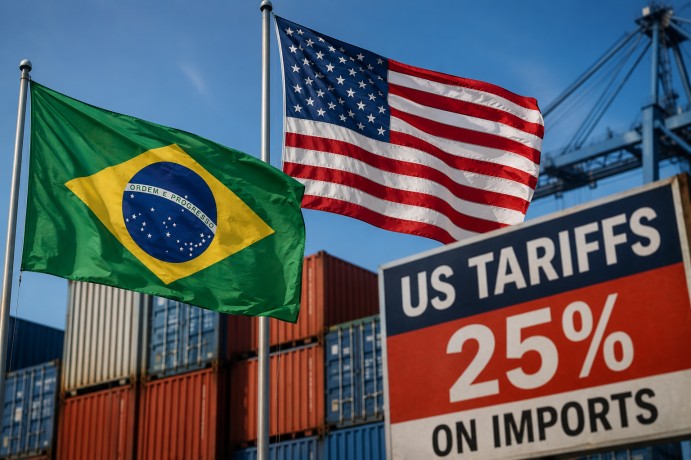
The Brazilian government has expressed strong opposition to the United States’ recent decision to levy a 25% tariff on select Brazilian products, a measure set to take effect from July 22. Describing the tariffs as unwarranted, Brazil has firmly denied allegations of engaging in unfair trade practices, which Washington cited as the basis for the new policy. In response, Brazilian officials have issued a statement rejecting these accusations and criticizing the U.S. move.
While the tariffs will affect a range of Brazilian imports, some key products have been spared to prevent disruptions in the supply chain. These exceptions include coffee, beef, oranges, orange juice, and certain oil, gas, as well as aerospace components. The decision, according to the U.S. Trade Representative, comes after a thorough investigation that reportedly found Brazil guilty of maintaining several unfair trade practices. Among these, the U.S. cites inadequate anti-corruption measures and unreasonable trade policies, prompting the tariff imposition to level the playing field for American businesses and workers. Despite the new tariffs, U.S. officials have indicated that discussions with Brazil remain ongoing.
Adding to the tensions, U.S. Secretary of State Marco Rubio has accused Brazilian President Luiz Inácio Lula da Silva’s administration of not negotiating earnestly, asserting that the country’s economic strategies have adversely impacted both American and Brazilian interests. Rubio’s comments highlight the strained trade relations between the two nations, with Brazil standing firm against the criticisms.
Brazil’s stance against the U.S. tariffs underscores the complex dynamics of international trade, where each nation seeks to protect its economic interests. As the situation develops, both countries continue to engage in dialogues aimed at resolving their differences, despite the current impasse.