
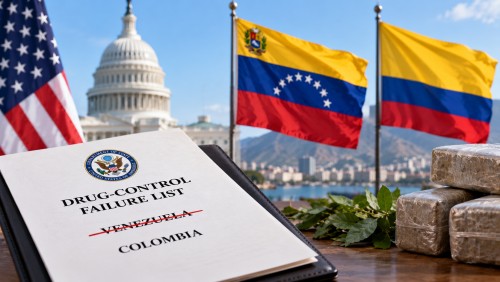
The United States continues to refine its approach toward international counternarcotics efforts, highlighting its commitment to cooperation with Latin American countries. In a recent development, the U.S. government has removed Venezuela from its list of countries that demonstrably fail to meet international drug control obligations. This decision marks a shift in U.S. policy, acknowledging progress made by Venezuela in combating drug trafficking under interim President Delcy Rodríguez.
Previously, Venezuela was listed among nations not meeting U.S. counternarcotics standards, but the Trump administration has recognized improvements in the country’s efforts against drug-trafficking organizations. This change in status signals a positive acknowledgment of Venezuela’s recent actions to tackle drug-related issues.
Meanwhile, Colombia remains on the U.S. list of countries that have not met international counternarcotics commitments. The White House has identified Colombia as one of four nations failing to make substantial progress over the past year. However, President Donald Trump indicated that Colombia could be removed from this list next year, provided it demonstrates further advancements in areas such as coca cultivation reduction, cocaine production control, and dismantling drug-trafficking networks.
Colombian officials have expressed their intentions to address the full spectrum of the drug-trafficking chain, from illicit crop eradication to dismantling production facilities and trafficking routes. Their efforts aim to tackle both domestic and international components of the drug trade, which remain a significant challenge for the country.
This strategic update from Washington underscores the U.S.’s ongoing focus on enhancing counternarcotics cooperation across Latin America. Despite Venezuela’s removal from the failing list, both Venezuela and Colombia are still recognized as major drug-transit or illicit drug-producing countries for the fiscal year 2027. The U.S. remains vigilant, seeking tangible progress in its collaborative efforts to curb drug trafficking across the region.