
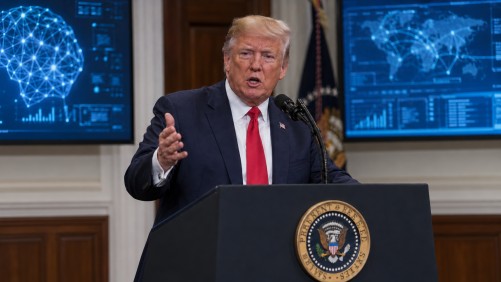
The rapid advancement of artificial intelligence (AI) continues to spark debates globally, as leaders grapple with the implications of this transformative technology. In the United States, discussions have intensified around how to manage AI’s potential risks without stifling innovation. This context sets the stage for former President Donald Trump’s recent announcement to appoint an AI czar and establish an “AI Force,” a new federal initiative designed to oversee AI developments.
Trump’s plan to form an AI oversight body, akin to the US Space Force, signals a strategic move to assert American leadership in the AI sector, especially amid concerns over China’s growing capabilities. While details on the structure and timeline of the proposed AI Force remain sparse, the initiative underscores a critical aspect of the broader conversation about balancing innovation and safety.
Throughout his presidency and beyond, Trump has voiced skepticism towards overregulating AI, cautioning that it might hinder progress and weaken the United States’ competitive edge against China. In a recent social media post, he downplayed the perceived dangers of AI, emphasizing that existing laws could address any harmful actions by individuals or companies using the technology.
The announcement arrives at a time when international scrutiny of AI is on the rise, especially regarding autonomous systems that operate with minimal human oversight. Prominent figures in the tech industry have urged for careful consideration of AI’s capabilities, advocating for measures to ensure that such systems remain aligned with human intentions.
Trump’s proposal comes shortly after California Governor Gavin Newsom introduced plans for a state-level AI safety panel, which aims to explore regulatory measures, including mechanisms to deactivate AI systems that deviate from their intended functions. This initiative, along with similar calls from Republican officials like Florida Governor Ron DeSantis and Utah Governor Spencer Cox, highlights the diverse approaches within the US to address AI safety and governance.
As the debate over AI policy continues, Trump’s announcement adds a new dimension to ongoing discussions about the future of AI in America. The focus remains on finding a balance between fostering technological advancement and ensuring public safety, as stakeholders navigate the complex landscape of this rapidly evolving field.