
The United States continues to grapple with persistent inflation, which has remained a pressing challenge for both consumers and policymakers. Despite recent efforts to stabilize the economy, inflationary pressures remain significant, accentuated by high energy prices affecting households and businesses alike. Amid these ongoing economic pressures, the Federal Reserve has opted to increase its benchmark interest rate by 0.25 percentage points, bringing it to a range of 3.75% to 4%.
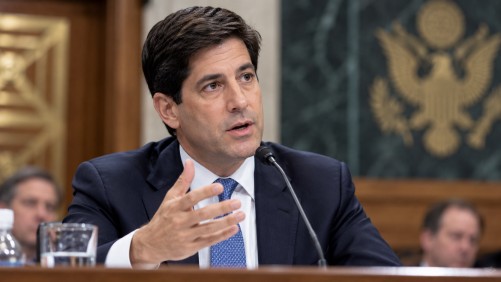
This decision marks the first interest rate hike since July 2023, as the Federal Reserve intensifies its efforts to control inflation that has shown little sign of meaningful improvement. Kevin Warsh, the Fed Chair, emphasized that inflation remains excessively high, suggesting that the central bank’s actions are necessary to address enduring price pressures. The rate increase follows a period of significant monetary adjustments, with previous hikes aimed at curbing inflation that peaked at 9.1% in June 2022.
While the Federal Reserve continues its strategy to manage inflation, President Donald Trump has advocated for significantly lower interest rates, arguing that reduced borrowing costs would be beneficial. His stance has brought renewed focus on the Federal Reserve’s independence in setting monetary policy, a critical aspect of its role in the U.S. economy.
The recent interest rate hike could have wide-ranging impacts, potentially affecting the cost of mortgages, car loans, student debt, and business borrowing. These costs, in turn, may influence consumer demand and overall economic activity. As part of its economic outlook, the Federal Reserve has projected the possibility of another rate increase by the end of the year, while anticipating that it could take several years for inflation to return to the target rate of 2%.
The decision to raise rates comes after a period of rate cuts in 2024 and 2025, reflecting the Federal Reserve’s ongoing assessment of the economic landscape. As inflation continues to erode household purchasing power and weaken inflation-adjusted wages, the central bank remains committed to its dual mandate of fostering maximum employment and price stability.