
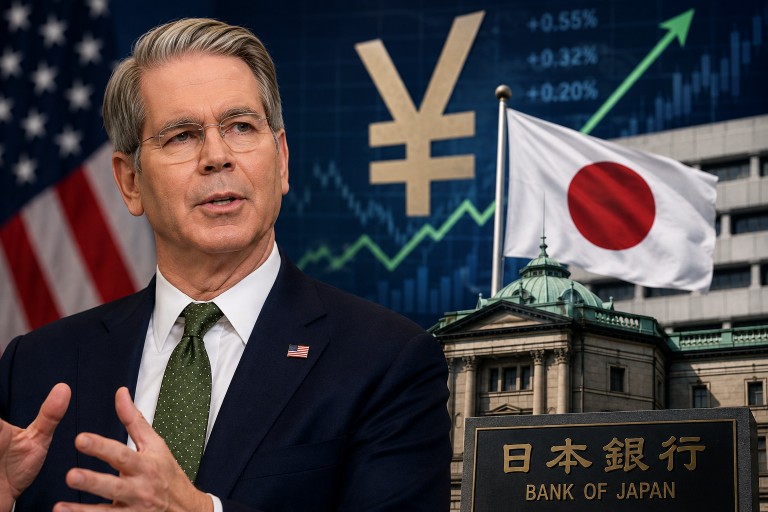
In the context of ongoing discussions on global economic stability, U.S. Treasury Secretary Scott Bessent has openly endorsed Japan’s initiative to bolster the yen. His remarks align with growing market speculation that the Bank of Japan (BOJ) may decide to raise interest rates during its scheduled policy meeting on September 17-18. Bessent’s comments came after a meeting with BOJ Governor Kazuo Ueda, which took place on the sidelines of the G20 finance ministers and central bank governors’ summit in Asheville, North Carolina. He highlighted the impact of a weakened yen in contributing to inflationary pressures and emphasized the need for robust monetary policy coupled with transparent communication to manage inflation expectations and curb excessive currency fluctuations.
Anticipation of a potential interest rate hike by the BOJ has been building in financial markets, especially after the central bank’s rate increase earlier in June. Should the BOJ opt for another hike in September, it could signal a shift towards a more aggressive approach in monetary tightening. This is against the backdrop of Japan’s benchmark 10-year government bond yield climbing above 3% for the first time since 1996, indicating expectations of tighter monetary policy and raising concerns about the country’s fiscal health.
The rise in interest rates has broader implications for Japan’s economy. Higher yields are escalating the government’s debt-servicing costs, with estimations from the Finance Ministry pointing to a significant increase in interest payments if borrowing costs remain elevated. This situation presents a challenge as the government seeks to manage its fiscal responsibilities amidst tightening monetary conditions.
Japanese households are also feeling the effects, especially those with fixed-rate mortgages who are now facing higher costs. However, the increase in interest rates does offer some advantages, particularly for savers and financial institutions, as it enhances returns on deposits and long-term investments. This dual impact illustrates the complex economic landscape where both challenges and opportunities exist concurrently.
The BOJ is thus tasked with a challenging balancing act: supporting the yen and controlling inflation without imposing undue stress on households, businesses, and government finances. As the central bank navigates these monetary policy decisions, its actions will be closely watched for their broader implications on both domestic and international economic stability.