
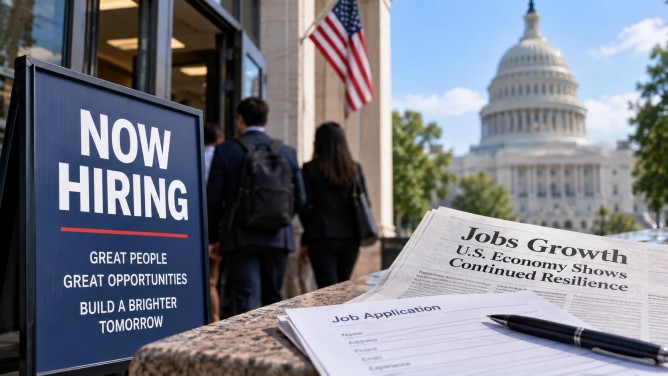
The US labor market showed signs of recovery in August with the addition of 162,000 jobs, marking a rebound from a sluggish summer. Despite the increase in employment, the unemployment rate held steady at 4.1%. The job market has experienced considerable volatility in recent months, with March seeing a robust gain of 214,000 jobs, which sharply declined to just 21,000 in July. While August’s job growth surpassed economists’ predictions of at least 50,000 new jobs, it still highlights an economy experiencing uneven momentum.
Revisions to previous months’ job figures also reflect some positive adjustments. June’s employment numbers were revised upward from an initial estimate of 20,000 to 31,000, and July’s figures were corrected from a reported loss of 23,000 jobs to a gain of 21,000. However, the labor market’s overall performance remains cautious, as private-sector employment saw a modest increase of only 38,000 jobs in August, indicating companies are hesitant to aggressively expand their workforce.
Economists have characterized the current hiring landscape as a “slow hire, slow fire” environment. This means businesses are neither rapidly increasing nor significantly reducing their employee numbers. In July, job openings and layoffs remained relatively unchanged, while the rate of workers voluntarily leaving their jobs stayed flat. This trend suggests that employees are increasingly wary of finding new opportunities in the current economic climate.
Adding to the challenges facing the labor market is the pressure from rising inflation. The annual inflation rate in the US climbed from 2.4% in February to 3.4% in July, exacerbating financial pressures on households as they contend with higher prices. Concurrently, increased bond yields have sparked concerns about the cost of borrowing. Higher Treasury yields can lead to more expensive mortgages, car loans, and student debt, potentially straining consumer finances further.
The Federal Reserve finds itself in a delicate position as it navigates the dual mandate of curbing inflation and supporting employment. While raising interest rates could help bring inflation closer to the 2% target, it risks further slowing an already decelerating labor market. Meanwhile, President Donald Trump has advocated for lower interest rates, arguing that reduced borrowing costs would bolster the US economy.