
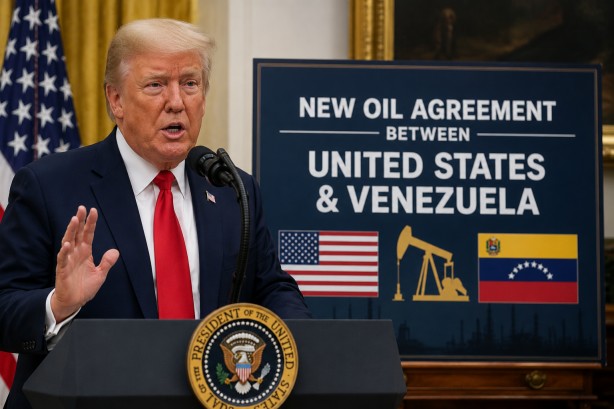
In a significant development, US President Donald Trump has unveiled a groundbreaking oil agreement with Venezuela, asserting that the United States will secure “majority” control over more than 65 billion barrels of Venezuela’s proven oil reserves. The announcement highlights a collaboration with private enterprises alongside senior US officials, though Trump has yet to disclose specific details regarding the companies involved, the precise oil fields, or the framework for US control over these reserves.
Venezuela, known for possessing the world’s largest proven oil reserves estimated at approximately 303 billion barrels, currently produces around 1.25 million barrels of crude oil daily. This output continues despite the prolonged decline of its energy sector. The newly forged agreement aligns with Washington’s aim to bolster the flow of Venezuelan crude oil to American refineries and stimulate US investment in the country’s oil industry. Such access could further aid the US in mitigating rising gasoline prices and replenishing its strategic petroleum reserves.
Recent reports have suggested that the United States was engaged in advanced negotiations for direct stakes in several prominent Venezuelan oil fields, potentially involving substantial financial commitments from American energy firms. These potential investments underscore the strategic importance of the agreement for US energy interests.
However, the deal has not been without its critics. Elements of Venezuela’s opposition have expressed concerns regarding the extent of US involvement in the country’s energy resources. Critics question the implications of such a significant foreign presence in their national industry.
As US energy companies gear up for potential investments in Venezuelan oil fields, further details about the agreement, including its ownership structure and the companies involved, are anticipated to be revealed. The unfolding developments will likely shape the future landscape of US-Venezuelan energy relations.