
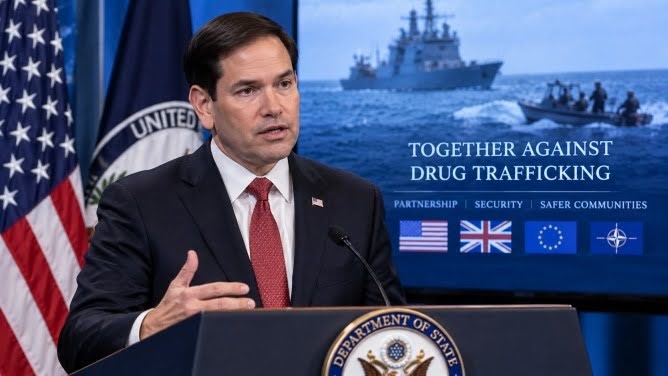
During a visit to Ecuador, US Secretary of State Marco Rubio announced plans for the United States to enhance collaboration with Latin American allies in the fight against drug trafficking. He underscored that the US military retains the right to target vessels when deemed necessary. Rubio highlighted efforts to establish joint operational agreements with nations like Ecuador and Colombia, focusing particularly on actions within their territorial waters and in compliance with local regulations.
This development arises in the context of an ongoing US military initiative aimed at intercepting boats suspected of drug trafficking activities. A recent operation in the Caribbean Sea resulted in the deaths of three individuals, contributing to a cumulative toll of at least 230 fatalities across 69 operations since the campaign’s inception in September 2025. Rubio noted that future military engagements would be carefully assessed on a case-by-case basis, taking into account the threat level and the vessel’s location.
Rubio emphasized the importance of regional partnerships, stating that working closely with local governments would be instrumental in disrupting and eventually dismantling drug-trafficking networks. The US is keen on fostering these alliances as a strategic shift toward more cooperative approaches following criticism of previous unilateral military actions. These earlier operations were condemned for targeting vessels under the Trump administration’s allegations that their occupants were involved with “narco-terrorists.”
The move to strengthen cooperation with Latin American countries represents a significant adjustment in US policy, aiming to align more closely with international partners and respect their sovereignty. Rubio’s remarks indicate a clear intention to balance military action with diplomatic efforts, ensuring that operations against drug traffickers are conducted responsibly and effectively, with the support of the nations affected.