
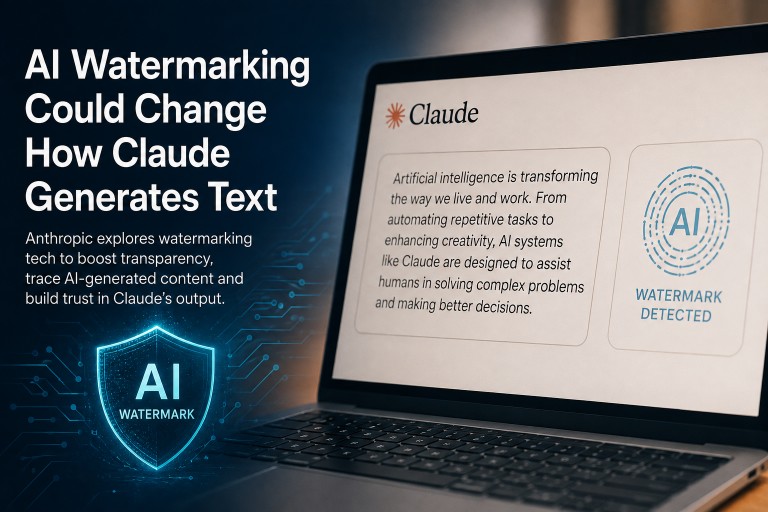
As the European Union prepares to implement new regulations mandating that AI-generated content be identifiable, Anthropic is stepping up with a watermarking system for its Claude AI models. This development is designed to subtly alter the statistical choices made by Claude during text generation. The adjustments are intended to be unnoticeable to the average reader but will form patterns detectable with specialized technology, adhering to the upcoming EU rules.
There is ongoing debate about whether this watermarking will compromise the quality of AI-generated text. Critics express concerns that modifying the model’s word-selection process might hinder its ability to produce the most precise or natural language. However, many computer science experts believe that the impact will be negligible, as AI models inherently incorporate randomness in their word choices. The watermark aims not to eliminate this randomness but to make it statistically predictable, thus allowing for the identification of AI-generated content.
The introduction of this watermarking system comes amid broader concerns about the proliferation of AI-generated material online. Experts caution that if future AI models are extensively trained using content generated by other AI systems, it could lead to “model collapse,” which might degrade the quality and dependability of future AI technologies. As AI-generated content becomes more prevalent, watermarking could play a crucial role in distinguishing machine-produced text while safeguarding the integrity of future AI training datasets.
Anthropic’s initiative could be a pivotal step in addressing the challenges posed by the increasing volume of AI-generated content. By making machine-generated text identifiable, this system not only complies with regulatory requirements but also supports the ongoing efforts to maintain the quality of AI systems. As the digital landscape evolves, such measures may prove essential in managing the integration of artificial intelligence in content creation and dissemination.