
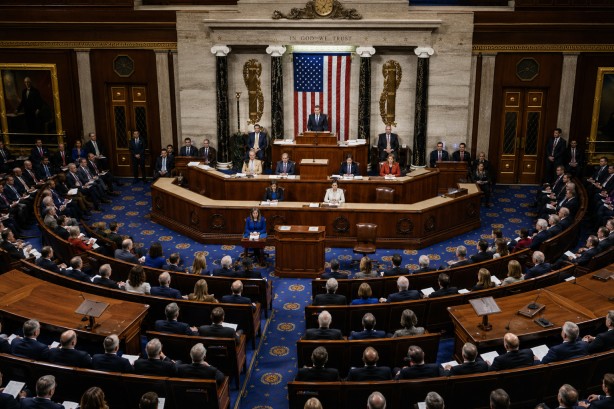
In a recent legislative move, the U.S. House of Representatives has approved the National Defense Authorization Act (NDAA) with a budget of $1.15 trillion. The decision was passed with a narrow margin of 216-212, reflecting a strong partisan divide over the bill. The NDAA is now set to be reviewed by the Senate. This significant defense spending package includes a planned pay increase of 5% to 7% for military personnel and allocates funds for modernizing and bolstering the capabilities of the U.S. armed forces.
Republican leaders have advocated for the bill, emphasizing its role in updating military operations and reinforcing the nation’s defense mechanisms. Despite this, the measure faced opposition from most Democrats. They criticized the bill for prioritizing defense spending at a time when domestic programs are experiencing budget cuts. The contention was further fueled by political tensions related to former President Donald Trump’s decision to conduct military strikes in Iran without prior congressional consent, raising concerns about escalating U.S. military involvement in the Middle East.
Further complicating the bill’s passage were provisions related to voting legislation. The NDAA included measures backed by Trump, such as stricter voter identification requirements and limitations on mail-in voting. Democrats opposed these inclusions, arguing that electoral regulations should not be intertwined with defense-related legislation. This aspect added another layer of controversy to the bill’s progression through the House.
Amendments to the bill also sparked debate, notably the rejection of a proposal to cease U.S. military aid to Ukraine. Other amendments addressed policies concerning transgender military service members and defense healthcare, further intensifying discussions among lawmakers. The complexity of issues surrounding the NDAA reflects broader political tensions and divergent views on military and domestic priorities.
In a related development, House Republicans have endorsed a budget framework authorizing $73 billion for military operations in Iran. Although this figure falls short of the Pentagon’s comprehensive defense funding request, it highlights the ongoing focus on U.S. military involvement in the region. As the NDAA moves to the Senate, these issues are expected to continue to provoke rigorous debate among legislators.