
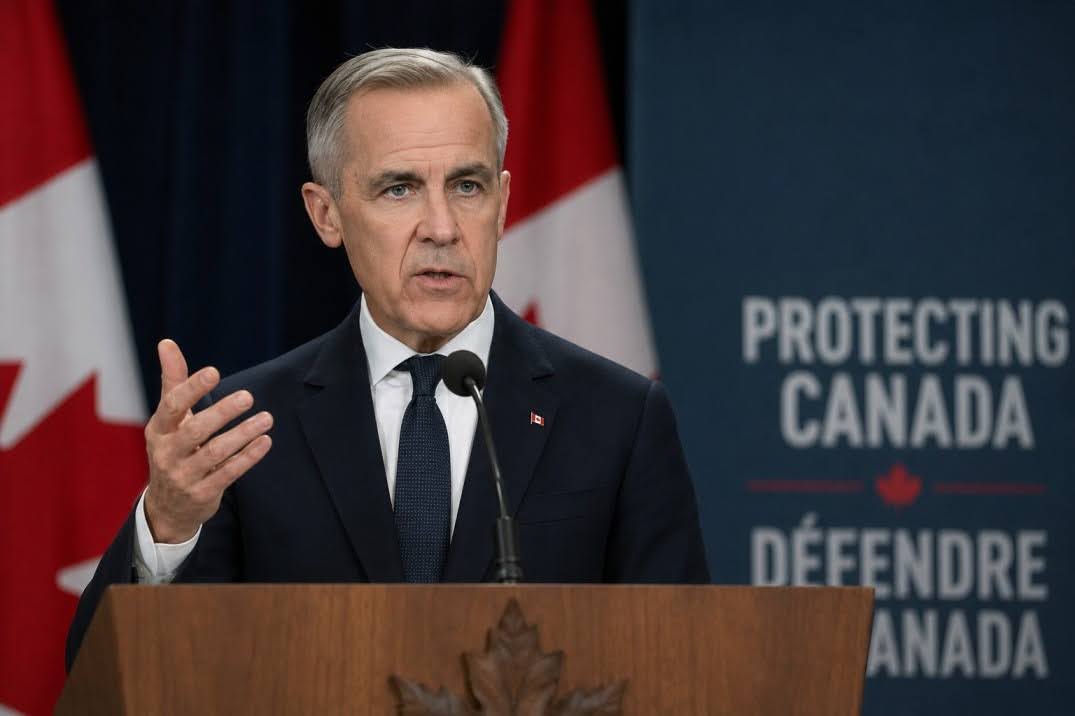
With tensions escalating between the United States and Canada, Canadian Prime Minister Mark Carney has issued a sharp rebuke of the Trump administration, urging American officials to move past mockery and engage in earnest discussions on trade. His comments come just days ahead of Canada’s planned imposition of retaliatory tariffs on American goods. Carney decried the insults aimed at Canada as unworthy of the involved offices’ dignity and emphasized that meaningful trade dialogues could only resume if the U.S. abandoned its current strategy of posturing and memes in favor of substantive negotiations.
The discord has been simmering for weeks, exacerbated by President Trump’s controversial decision to rename Lake Ontario as “Lake America,” an action met with widespread disapproval across Canada. The U.S.’s top trade negotiator has minimized the potential fallout from this trade conflict, suggesting that Canada would suffer more economically than the United States. He also noted that no active trade negotiations were currently taking place, which has only added to the existing tensions.
This trade standoff follows the breakdown of negotiations between the two countries roughly a week ago. In response, Washington imposed steep 50% tariffs on $20 billion worth of Canadian imports. In retaliation, Canada, which is one of the U.S.’s largest trading partners, announced its own set of tariffs on $20 billion of American goods, which are scheduled to take effect on September 8. Consumers in both nations are likely to begin feeling the impact soon, particularly concerning everyday commodities.
Discrepancies in the accounts of why trade talks collapsed further complicate the situation. The U.S. negotiator attributed the breakdown to Canadian demands, specifically their insistence on reduced taxes for heavy-duty trucks, suggesting this was a major obstacle. He also questioned Canada’s sincerity in seeking an agreement, hinting that if Canada limited American imports, the U.S. might consider reciprocal measures. Conversely, Canadian officials pointed to internal disarray within the White House concerning the leadership of the negotiation efforts. Carney highlighted that American negotiators had raised Canada’s French-language protections as a contentious issue, though he reiterated that these are established rights, especially in Quebec.
President Trump has continued to frame the conflict in terms of Canada desiring the benefits of closer U.S. ties without formal integration, accusing Canada of long-standing heavy tariffs on American agricultural goods. Meanwhile, the U.S. negotiator admitted there was confusion about what was being negotiated, unsure if the breakdown was due to political or economic reasons, but maintained that the choice was not between the current tariffs and a completely duty-free trade arrangement.