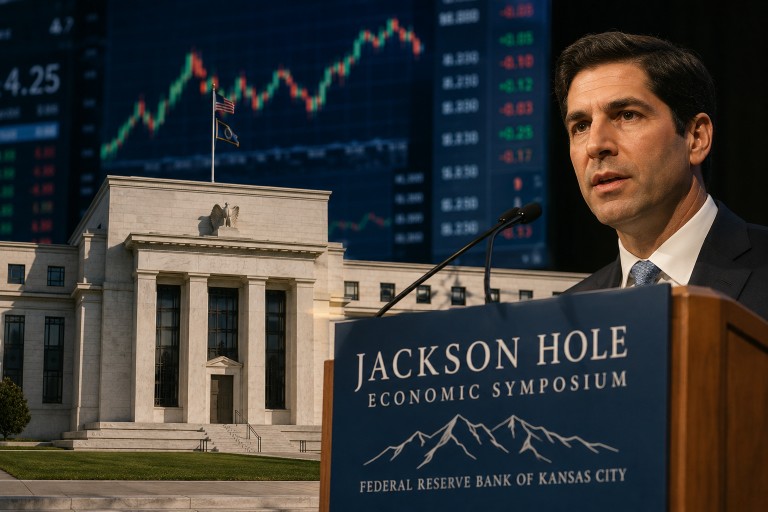
As financial markets eagerly anticipate US Federal Reserve Chair Kevin Warsh’s forthcoming address at the Jackson Hole symposium, investors are keen to glean insights into the central bank’s strategy concerning interest rates and inflation. Warsh’s recent shift away from providing explicit forward guidance has left market participants more reliant on interpreting market signals to gauge the Federal Reserve’s intentions. This shift has introduced a degree of uncertainty about the central bank’s response to inflation, which continues to hover above the 2% target.
The complexity of the situation is further compounded by the rise in long-term Treasury yields, which have altered the financial landscape. Some investors argue that the increase in yields is already exerting a tightening effect on financial conditions, potentially diminishing the necessity for additional interest rate hikes. This development has stirred considerable debate among market observers about its implications for future monetary policy decisions.
Attention has intensified following the US Treasury’s decision to increase its buybacks of long-term bonds in response to a recent sell-off. While officials have framed this move as a measure to bolster market liquidity, many investors interpret it as a strategic attempt to alleviate upward pressure on long-term borrowing costs. This intervention underscores the delicate balance policymakers must strike in managing both inflation and economic growth.
With these dynamics in play, the financial community is eagerly awaiting more definitive guidance from Warsh regarding the Federal Reserve’s commitment to achieving its inflation target. There is a palpable demand for clarity on whether additional rate hikes might be necessary to steer inflation back to the desired 2% level. Warsh’s Jackson Hole speech is poised to be a critical moment for markets seeking direction on the intricate interplay between bond market conditions and Federal Reserve policy decisions.
In the lead-up to this significant address, all eyes are on Warsh to provide much-needed signals about the future trajectory of US monetary policy. His remarks are expected to offer valuable clues about how the central bank plans to navigate the current economic landscape, particularly in light of evolving bond market conditions and their impact on broader financial stability.